
The edit
Where the art of the home becomes clear
Welcome To
Written by Megan Paterson, Principal Designer and Founder
If you’ve ever set a lemon wedge on a marble countertop or left a wine glass on a marble table, you’ve seen etching firsthand. That subtle dull spot where the stone has reacted to acid is the subject of countless anxious Google searches. Honestly, we think it’s a lot of unnecessary worry.
Natural marble etches. It softens with use. It also tells the truth about time. And in the world of Modern European design, that’s not seen as a flaw, but rather, as the point.
Let’s talk about the practical side of what etching looks like, how to address it, and what cultured marble means for your space. We’ll offer up how you can go about removing it if you truly want to go that route, but if the most beautifully designed homes in Europe have taught us anything, it’s to stop fighting it.
What Does Etching on Marble Look Like
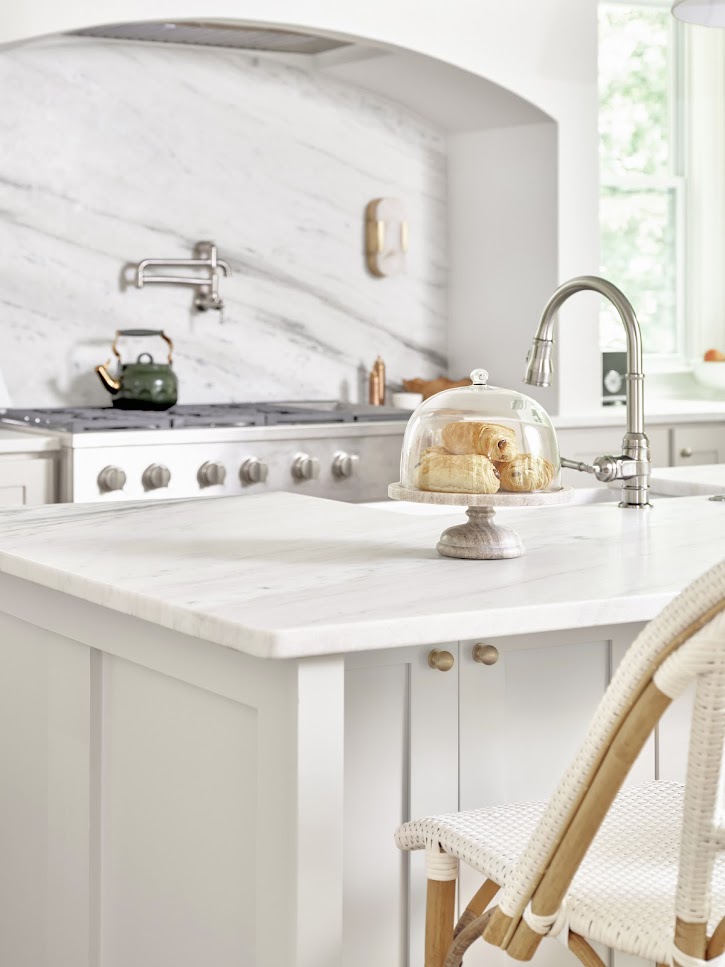
Etching appears as a dull, lighter mark or hazy patch on the surface of marble. It’s often mistaken for a water stain. Here’s the difference. A water stain sits on top of the stone. Etching is a chemical reaction that actually changes the surface of the marble itself.
How’s this happen? Acidic substances like citrus juice, vinegar, wine, coffee, and even certain cleaning products react with the calcium carbonate in natural marble. This reaction can dissolve the polished surface at a microscopic level. The result is a loss of sheen, or “shininess,” in that specific spot. On polished marble, etching is more visible because there’s a clear contrast between the glossy surface and the dulled patch. On honed marble, etching is far less noticeable because the surface already has a matte finish. This is why it’s a popular and forgiving option for high-use areas like kitchens.
It’s important to understand that etching is not a crack, a stain, or structural damage. The marble is intact, but the finish has changed.
Why People Love Marble Etching & Why People Don’t
Everyone is entitled to their own opinions, but in our experience the people who love it tend to see etching as part of marble’s story. A patina that develops gradually over years of real use gives a warmth and character that can’t be replicated by a factory finish. Etching softens the look of polished stone, lending it that worn-in quality you find in European homes where the marble has been there for generations.
The people who dislike it have equally valid reasons. Etching requires acceptance of change, and not everyone wants that. For some clients, visible surface changes bring comfort, and for others, it creates anxiety. High-gloss polished marble shows etching most clearly, and in a space designed around pristine surfaces, the contrast can feel jarring. The nice part is, if you’re someone who isn’t a fan of etched marble, there are excellent alternatives. (Or if you love the look of marble, but you don’t love the look of staining, there are treatments, like sealing, that will greatly protect it.)
How to Clean Marble Countertops After Etching
Marble doesn’t love sitting wet for extended periods of time so spray, wipe, and dry. Simple as that. Avoid anything acidic or abrasive. That means no vinegar, no lemon-based sprays, no bleach, and no scrubbing pads. These will cause further etching and dull the surface over time.
For everyday cleaning, warm water and a soft cloth is genuinely all you need. For a deeper clean, use a pH-neutral stone cleaner specifically formulated for natural marble.
How to Clean Marble Floors, Walls & Backsplashes After They Etch
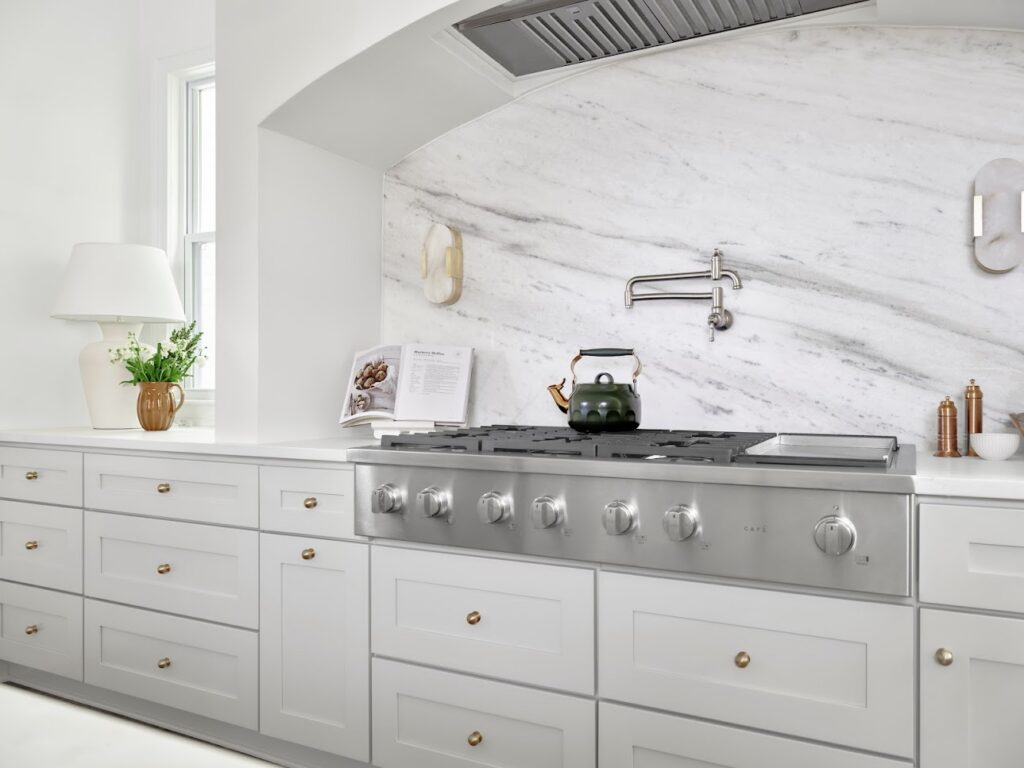
The same rules apply as with marble countertops here. Use a pH-neutral cleaner, soft cloth or mop, and no acidic or abrasive products.
For marble floors, avoid steam mops as the heat and moisture can work into the stone over time. Your best bet is to use a microfiber mop with a diluted stone-safe cleaner. Marble backsplashes in kitchens are exposed to cooking grease and splatter, so they benefit from a gentle wipe-down after you cook. A soft sponge and warm water handles most of it. For any buildup, there’s no need to scrub. Just use a small amount of pH-neutral cleaner and light pressure.
We mentioned above that marble doesn’t love sitting wet. That’s why marble walls in bathrooms and showers should be cleaned with a squeegee after each use to minimize soap scum buildup. A stone-safe spray cleaner once a week keeps things fresh without putting the marble at risk.
What Is Cultured Marble & Does It Etch?
Cultured marble is a man-made material composed of marble dust or crushed limestone combined with resins and pigments. It is then coated with a gel surface finish. You’ll commonly find cultured marble in bathrooms and is typically less expensive than natural stone.
Thanks to that protective gel coat on its surface, it doesn’t etch the way natural marble does. The gel coat acts as a barrier against acidic contact. But this surface can scratch, yellow over time, and is difficult to repair once damaged. Natural marble can be refined and repolished indefinitely, but a damaged gel coat on cultured marble is likely permanent.
How to Remove Etching From Marble
We know etched marble doesn’t vibe with everyone. While we love incorporating it into a Modern European design, if you choose to go about removing it, know that it depends on severity.
Light etching can often be addressed with a marble polishing powder or cream, a soft cloth, and gentle buffing for a reasonable DIY solution. Moderate etching may require a bit more technical of an approach with wet sanding before finishing with a polishing compound. For heavy etching, you’ll want to call a stone restoration professional. They have the equipment to bring your surface back to what it was before.
Why We Love Etched Marble In Modern European Homes
The most beautiful homes we’ve enjoyed don’t look untouched. They look lived in. And the marble in those spaces has largely contributed to that timeless style. In much of American design culture, we treat maintenance-free as the gold standard because it’s often seen as durable and resistant. It’s important to note that natural marble with a patina isn’t damaged. If you look at it for what it truly is, those subtle traces of coffee, olive oil, and lemon are not imperfections. They’re evidence of a home being lived in and loved.
About the Author
Megan Paterson is the Principal Designer and Founder of Megan Paterson Interiors, an Atlanta-based studio specializing in interior design, full-service renovations, and new builds. Since founding the studio, she has led projects across North Atlanta’s Johns Creek, Alpharetta, Milton, Sandy Springs, Brookhaven, and Buckhead communities, and has been featured in Shoutout Atlanta. She works across a range of interior design styles with all of her projects built around each client’s taste and how they actually live.
All content on this site is produced in accordance with our editorial standards, including our policies on sourcing, accuracy, and corrections.

Be the first to comment