
The edit
Where the art of the home becomes clear
Welcome To
Written by Megan Paterson, Principal Designer and Founder
I pick floor tiles the same way I pick every material for a client’s home: by asking how the room actually gets used before I ask what looks good in a photo. A pattern that reads beautifully on a mood board can feel busy underfoot in a small hallway, and a layout that photographs quietly can be the thing that makes an entryway feel finished the moment you walk in. That’s the whole approach behind Megan Patterson Interiors: every material is chosen for how it lives with your family, not how it looks the day it’s installed.
Floor tile is one of the few decisions in a renovation that touches almost every room. It sets the tone for a kitchen, grounds a bathroom, and can carry a mudroom or basement through years of daily traffic. Here’s how I think through pattern selection, and why it matters more than most people expect.
Mosaic tile patterns
Mosaic tile is made up of small individual pieces, usually stone, ceramic, or glass, arranged into a repeating design. It’s one of the most versatile patterns because the scale of the pieces can change how a space feels. A tiny hexagon mosaic on a bathroom floor feels soft and traditional. A larger format mosaic in a shower niche or on a floor border feels more modern and architectural.
I use mosaic most often in bathrooms, where the smaller grout lines actually help with slip resistance in a wet space, and where the pattern becomes part of the design rather than just the flooring underneath it. If you want to see how that plays out in a finished space, take a look through our bathroom renovation projects. Every layout, tile size, and grout color is chosen to work with the rest of the room, the vanity, the lighting, the hardware, so the floor supports the design instead of competing with it. That’s the difference between tile that was picked off a shelf and tile that was specified for a room.
French pattern tiles
French pattern tile, sometimes called a Versailles pattern, uses a repeating sequence of four different tile sizes to create a layout with no visible grid. It’s one of my favorite patterns for natural stone floors because it has movement without looking busy, and it ages beautifully in a way that a uniform grid pattern doesn’t.
This pattern takes more planning than a standard tile layout. The tile sizes have to be ordered in the right ratio, and the installer needs a layout plan before a single piece goes down. It’s exactly the kind of detail built into every kitchen design from the start rather than leaving it for the contractor to figure out on site. It’s a quiet pattern that holds up in a busy room, which is exactly what a kitchen floor needs to do.
Tile Beyond the Floor
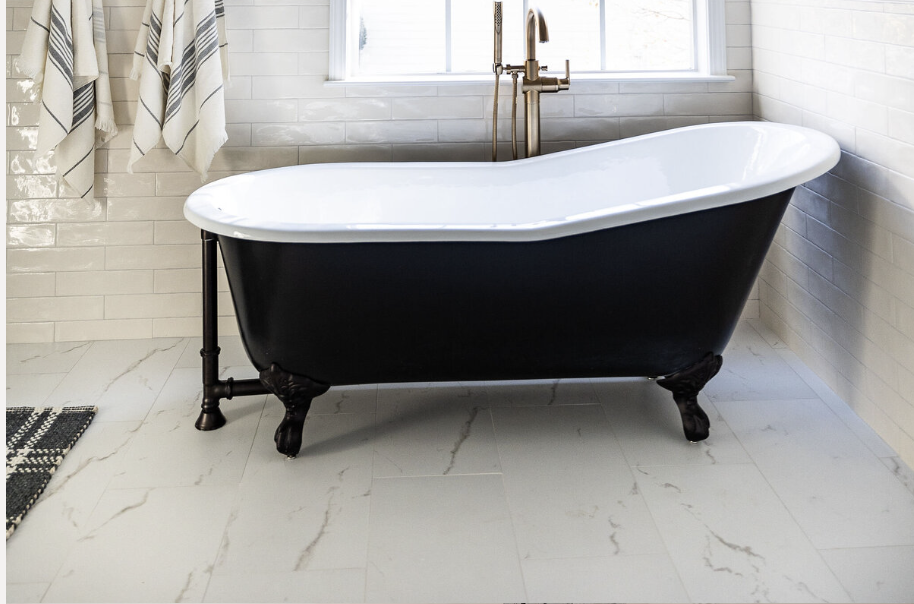
Tile does more work in a home than most people give it credit for. You’ll find we use it on shower walls, backsplashes, fireplace surrounds, and even as a decorative inset on a mudroom bench wall, anywhere texture and durability are needed without adding another material into the mix.
A kitchen with a patterned floor and a plain backsplash can feel unfinished, while the same kitchen with tile carried up the wall in a complementary pattern feels intentional from every angle. This is where pattern scale really matters: a bold floor pattern usually calls for a quieter, smaller-scale tile on the walls around it, and vice versa, so your eye has somewhere to rest.
It’s the kind of pairing I work through room by room across a whole project, rather than picking to match a single photo. You can see how that plays out across different spaces and styles in our portfolio, where floor, wall, and shower tile are always chosen together as a cohesive set.
How to clean tile grout for a spotless look
Even the most timeless tile pattern can start to look tired if the grout isn’t kept up. Grout is porous, which means it holds on to dirt, oil, and moisture more than the tile itself does. Regular cleaning keeps it looking like it did the day it was installed.
Here’s how to keep your grout looking fresh and those floor tile patterns looking as great as they can:
- Sweep or vacuum first. Grit on the surface acts like sandpaper on grout lines if you skip straight to mopping.
- Use a pH-neutral cleaner. Harsh acidic or alkaline cleaners can wear down grout over time, especially with natural stone tile.
- Scrub with a soft brush. A grout brush or an old toothbrush works into the lines without scratching the tile itself.
- Reseal grout annually. A fresh sealer keeps stains and moisture from soaking in, especially in kitchens and bathrooms.
This is part of why I choose materials the way I do. Every tile, grout color, and sealer is picked with maintenance in mind, not just appearance, because a floor only stays beautiful if it’s realistic to take care of. That’s built into every level of how I work. Whether it’s design only, or design with full procurement and project support, the goal is a floor you’ll still love the upkeep of 10 years from now.
A floor tile pattern is a small decision on paper and a large one in practice. It’s underfoot in every room you walk through, and it’s one of the few finishes that’s genuinely difficult to change later. If you’re planning a renovation and want that decision made with your home and your daily life in mind, book your consultation and let’s talk about it.
About the Author
Megan Paterson is the Principal Designer and Founder of Megan Paterson Interiors, an Atlanta-based studio specializing in interior design, full-service renovations, and new builds. Since founding the studio, she has led projects across North Atlanta’s Johns Creek, Alpharetta, Milton, Sandy Springs, Brookhaven, and Buckhead communities, and has been featured in Shoutout Atlanta. She works across a range of interior design styles with all of her projects built around each client’s taste and how they actually live.
All content on this site is produced in accordance with our editorial standards, including our policies on sourcing, accuracy, and corrections.

Be the first to comment